Sharjah Media City (Shams), AI messanded, AI Bataeh, Sharjah, United Arab Emirates P.O. Box: 515000
+971507899848,+971553125282
info@sihtuk.ae
contactsihtuk@gmail.com
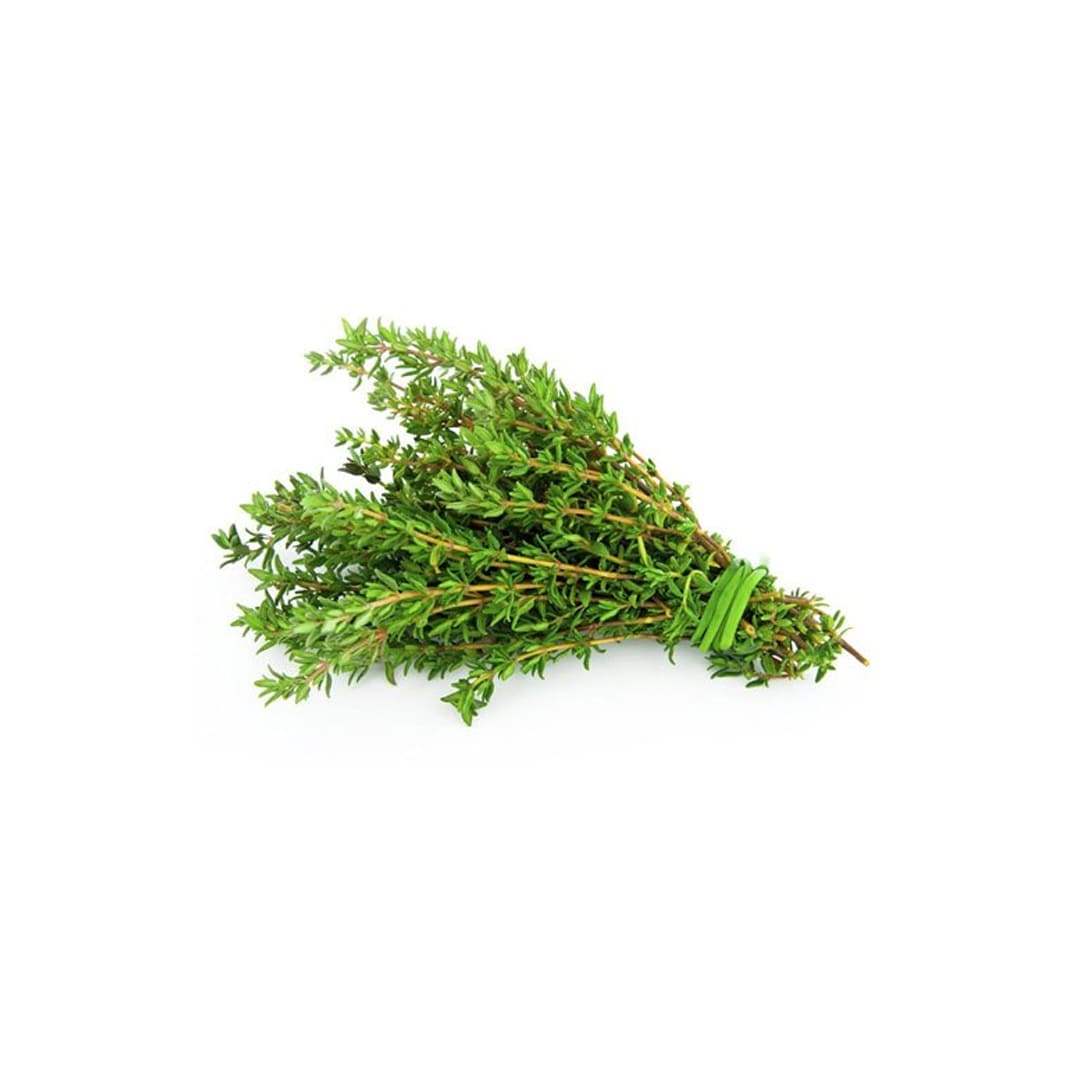

Thyme (/taɪ
30gm For Bulk Orders, contact at:
Origin Country :
Category : Fruits & Vegetables
Brand : Sihtuk
Packing Type : Recycle Pack
Delivery : Normal
Minimum Order Quantity :
1
ADD TO
CART
BUY NOW
Email:
info@sihtuk.ae
Contact No.: +971553125282, +971507899848
Thyme (/taɪm/) is the herb (dried aerial parts) of some members of the genus Thymus of aromatic perennial evergreen herbs in the mint family Lamiaceae. Thymes are relatives of the oregano genus Origanum. They have culinary, medicinal, and ornamental uses, and the species most commonly cultivated and used for culinary purposes is Thymus vulgaris.
Thyme is indigenous to the Mediterranean region Wild thyme grows in the Levant, where it might have been first cultivated. Ancient Egyptians used thyme for embalming. The ancient Greeks used it in their baths and burnt it as incense in their temples, believing it was a source of courage. The spread of thyme throughout Europe was thought to be due to the Romans, as they used it to purify their rooms and to "give an aromatic flavour to cheese and liqueurs". In the European Middle Ages, the herb was placed beneath pillows to aid sleep and ward off nightmares. In this period, women also often gave knights and warriors gifts that included thyme leaves, as it was believed to bring courage to the bearer. Thyme was also used as incense and placed on coffins during funerals, as it was supposed to assure passage into the next life.
The name of the genus of fish Thymallus, first given to the grayling (T. thymallus, described in the 1758 edition of Systema Naturae by Swedish zoologist Carl Linnaeus), originates from the faint smell of thyme that emanates from the flesh.
In some Levantine countries, and Assyria, the condiment za'atar (Arabic for both thyme and marjoram) contains many of the essential oils found in thyme. Thyme is a common component of the bouquet garni, and of herbes de Provence.
Thyme is sold both fresh and dried. While summer-seasonal, fresh greenhouse thyme is often available year-round. The fresh form is more flavourful, but also less convenient; storage life is rarely more than a week. However, the fresh form can last many months if carefully frozen.[10]

Lorem ipsum dolor sit amet, consectetur adipisicing elit, sed do eiusmod tempor incididunt ut labore et dolore magna aliqua. Ut enim ad minim veniam, quis nostrud exercitation.

Lorem ipsum dolor sit amet, consectetur adipisicing elit, sed do eiusmod tempor incididunt ut labore et dolore magna aliqua. Ut enim ad minim veniam, quis nostrud exercitation.