Sharjah Media City (Shams), AI messanded, AI Bataeh, Sharjah, United Arab Emirates P.O. Box: 515000
+971507899848,+971553125282
info@sihtuk.ae
contactsihtuk@gmail.com
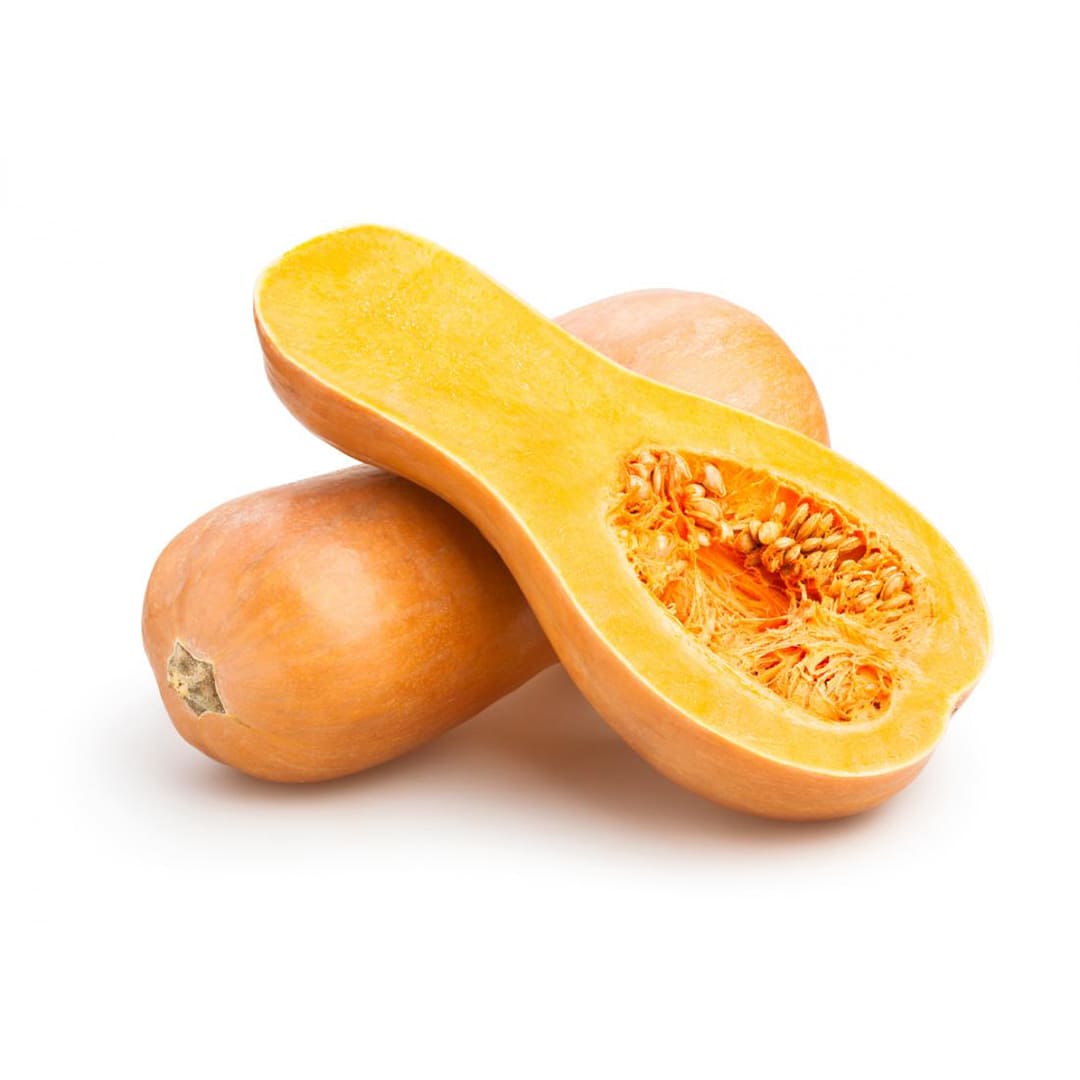

Butternut squash (Cucurbita moschata), known in Australia and New Zealand as butternut pumpkin or gramma, is a type o...
1 kg
For Bulk Orders, contact at:
Email:
info@sihtuk.ae
Contact No.: +971553125282, +971507899848
Butternut squash (Cucurbita moschata), known in Australia and New Zealand as butternut pumpkin or gramma, is a type of winter squash that grows on a vine. It has a sweet, nutty taste similar to that of a pumpkin. It has tan-yellow skin and orange fleshy pulp with a compartment of seeds in the blossom end. When ripe, it turns increasingly deep orange, and becomes sweeter and richer. It is a good source of fiber, vitamin C, magnesium, and potassium; and it is a source of vitamin A.
Although botanically a fruit (specifically, a berry), butternut squash is used culinarily as a vegetable that can be roasted, sautéed, toasted, puréed for soups such as squash soup, or mashed to be used in casseroles, breads, muffins, and pies. It is part of the same squash family as ponca, waltham, pumpkin, and calabaza.
The word "squash" comes from the Narragansett word askutasquash, meaning "eaten raw or uncooked". Although Native people may have eaten some forms of squash without cooking, today most squash is eaten cooked. Native Americans believed that it had extreme nutritional properties and would bury their dead with it to sustain them on their final journey.
The late-growing, less symmetrical, odd-shaped, rough or warty kinds, small to medium in size, but with long-keeping qualities and hard rinds, are usually called winter squash.
All three species of squashes and pumpkins are native to the Western Hemisphere. C. maxima, represented now by such varieties as Hubbard, Delicious, Marblehead, Boston Marrow, and Turks Turban, apparently originated in northern Argentina near the Andes or certain Andean valleys. At the time of the Spanish invasion, it was found growing in these areas and has never since been found elsewhere except as evidently carried by humans.
Since this plant requires a fair amount of hot weather for best growth, it has not become very well established in northern Europe, the British Isles, or in similar areas with short or cool summers. Only long-vining plants are known in this species.

Lorem ipsum dolor sit amet, consectetur adipisicing elit, sed do eiusmod tempor incididunt ut labore et dolore magna aliqua. Ut enim ad minim veniam, quis nostrud exercitation.

Lorem ipsum dolor sit amet, consectetur adipisicing elit, sed do eiusmod tempor incididunt ut labore et dolore magna aliqua. Ut enim ad minim veniam, quis nostrud exercitation.